



Engineering summary
ASCE 7-22 requires Vs30 for site classification. The DoReMi modular seismograph with SEISMOWIN MASW and ReMi software delivers shear-wave velocity profiles as a turnkey package.
In short: ASCE 7-22 Vs30 site classification requires measured shear-wave velocity in the top 30 m, and the DoReMi seismograph with SEISMOWIN meets it as a turnkey package. DoReMi scales from 1 to 255 channels with electronics embedded in the cable and a rechargeable battery; SEISMOWIN's MASW module produces S-wave profiles comparable to borehole logs while ReMi handles noisy sites using ambient vibration.
Streamline ASCE 7-22 VS30 Site Classification Using DoReMi® MASW Seismographs with SEISMOWIN
The latest ASCE 7-22 standard requires Vs30 shear wave velocity measurements as a key parameter for site classification and seismic design. This shift makes reliable, efficient, and accurate seismic characterization of soils more critical than ever for geotechnical engineers, structural designers, and regulatory compliance.
The DoReMi® Seismograph is the perfect solution. Its digital telemetry system with embedded electronics offers unmatched efficiency, scalability, and modularity. Each channel operates as an independent seismograph, enabling networks from 1 to 255 channels for projects of any scale. Lightweight, durable, and powered by a rechargeable battery with smart standby mode, DoReMi® ensures seamless field deployment and uninterrupted operation. With over 15 years of proven reliability and hundreds of global clients, it is a trusted standard in seismic surveys and geotechnical site investigations.
Paired with SEISMOWIN, a complete seismic data management and analysis suite, the DoReMi® becomes a turnkey solution for Vs30 determination. SEISMOWIN’s MASW (Multichannel Analysis of Surface Waves) and ReMi (Refraction Microtremor) modules provide advanced tools to analyze both active-source surface waves and ambient noise, ensuring flexibility in diverse field conditions. MASW delivers detailed S-wave velocity profiles comparable to borehole logs—without being affected by velocity reversals—while ReMi excels in noisy environments where passive surveys are preferable.
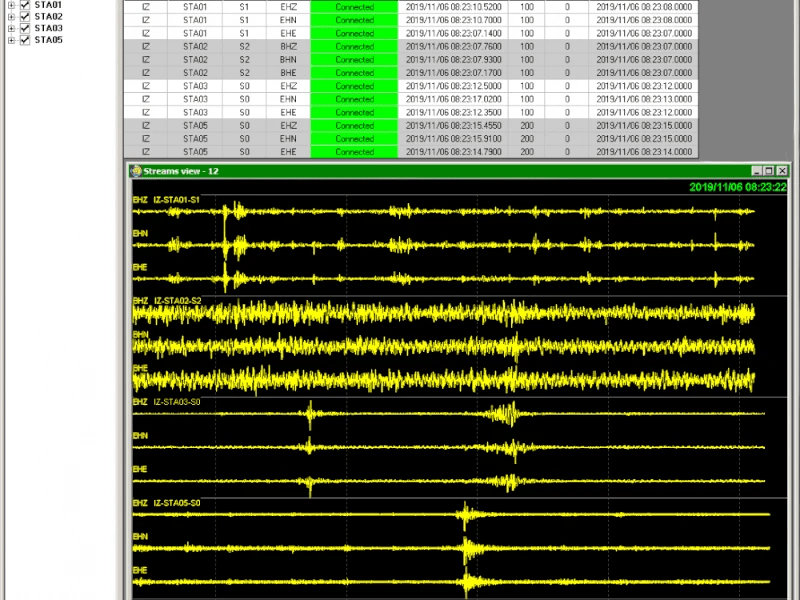

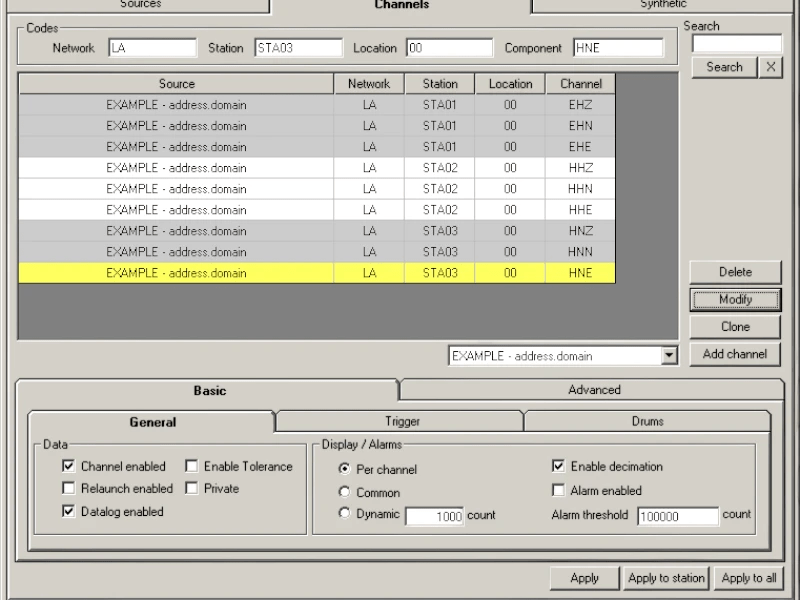


Together, DoReMi® + SEISMOWIN empower engineers to quickly and confidently obtain Vs30 values required under ASCE 7-22, streamlining the entire workflow from data acquisition to final reporting. In-house design, production, and support guarantee fast service, expert training, and customization to meet project-specific needs.
✅ Turnkey Package Includes:
- DoReMi® Seismograph with 12 or 24+ channels and 4.5 Hz geophones
- SEISMOWIN software with MASW & ReMi modules
- Complete field-ready system with battery, cabling, and accessories
- Training and technical support
With this integrated solution, compliance with ASCE 7-22 site classification requirements is no longer a challenge—it’s an opportunity to deliver faster, more reliable, and cost-effective results.
DoReMi Seismograph: The All-in-One Solution
Key Features of DoReMi Seismograph:
- Modular Design: Scalable to support 1 to 255 channels, allowing flexible configurations for diverse projects.
- Embedded Recording Electronics: Electronics are embedded in the cable, reducing electromagnetic interference.
- Lightweight & Portable: Easily transported with a cable wheeler, ensuring smooth deployment in remote sites.
- Integrated Battery System: Built-in rechargeable battery ensures continuous and independent operation.
- Noise Reduction: Digitalization near the geophone minimizes noise and prevents data loss or crosstalk.
- Flexible Sensor Integration: Supports 4.5 Hz geophones, downhole sensors (SS-BH-5C), and other seismic equipment.
- Free Analysis Software: Compatible with any processing software, simplifying data management and interpretation.


Advanced Software for Seamless Operation
The DoReMi Seismograph is complemented by advanced software tools, designed to streamline on-site data quality checks and post-processing workflows.
Key Software Capabilities:
- Pre-Shot Noise Monitoring: Ensures data integrity before acquisition.
- Downhole & Surface Data Management: Simplifies different acquisition scenarios.
- Signal Inversion & Overlapping: For SH shots and advanced processing.
- Data Filtering & Spectral Analysis: Advanced tools for FK and FV analysis.
- Roll-Along Acquisition: Simplifies large-area surveys.
- HVSR Preview: Horizontal-to-Vertical Spectral Ratio preview for subsurface mapping.
- Multi-Language Support: Available in English, Italian, and Chinese.
Applications of DoReMi Seismograph
- Seismic Hazard Assessment: Earthquake resilience site characterization.
- Geophysical Exploration: MASW, ReMi, Refraction, Reflection, and Downhole surveys.
- Infrastructure Projects: Foundation analysis and underground mapping.
- Resource Exploration: Aquifer detection, oil and gas reservoir profiling.
- Urban Development: Roadbed evaluations and soil stiffness assessments.
Data Outputs from DoReMi Seismograph
- 1D Shear Wave Velocity Profile:
- Vertical shear-wave velocity analysis for site characterization.
- 2D Shear Wave Velocity Profile:
- Comprehensive subsurface mapping when multiple acquisitions are performed.
These outputs are essential for geotechnical engineers, seismologists, and urban planners in making informed decisions.
Why Choose DoReMi Seismograph for MASW and ReMi Surveys?
- Dual Capability: Seamlessly supports both MASW and ReMi techniques.
- High Precision: Noise-free, reliable data acquisition.
- Scalable Design: Flexible configurations from 1 to 255 channels.
- Advanced Software Integration: Simplified analysis and data management.
- Portability: Lightweight design with modular architecture.
- Expert Support: Dedicated training, support, and consultation from QuakeLogic.
Conclusion
The DoReMi Seismograph by QuakeLogic represents a state-of-the-art solution for MASW and ReMi seismic surveys, offering unmatched flexibility, precision, and reliability. Whether it’s mapping shallow shear-wave velocity using MASW or profiling deeper subsurface layers with ReMi, DoReMi delivers results you can trust.
Experience precision, reliability, and innovation with the DoReMi Seismograph—your trusted partner in seismic exploration.
📞 For more information or to request a demo, contact us at:
Phone: +1-916-899-0391
Email: sales@quakelogic.net
Website: https://products.quakelogic.net/product/doremi-seismographs/
Key Takeaways
- ASCE 7-22 makes Vs30 shear-wave velocity a key parameter for site classification and seismic design.
- DoReMi channels act as independent seismographs, scaling from 1 to 255 channels with digitization near the geophone to cut noise and crosstalk.
- SEISMOWIN includes MASW and ReMi modules, pre-shot noise monitoring, roll-along acquisition, FK/FV analysis and HVSR preview.
- Turnkey package: DoReMi with 12 or 24+ channels, 4.5 Hz geophones, battery, cabling, SEISMOWIN software, training and support.
- Outputs are 1D shear-wave velocity profiles per spread and 2D profiles from multiple acquisitions.
Frequently Asked Questions
ASCE 7-22 requires Vs30, the average shear-wave velocity of the upper 30 m of soil, as a key parameter for assigning a site class and deriving seismic design values. This makes a reliable field measurement of shear-wave velocity necessary for geotechnical engineers and structural designers seeking code compliance, rather than relying only on generic soil descriptions.
MASW (Multichannel Analysis of Surface Waves) uses an active source such as a hammer and produces detailed S-wave velocity profiles comparable to borehole logs without being affected by velocity reversals. ReMi (Refraction Microtremor) is passive and analyzes ambient noise, so it works well in noisy urban environments where active surveys are difficult. SEISMOWIN includes both modules so one DoReMi spread can support either method.
The DoReMi seismograph is modular: each channel operates as an independent seismograph, and networks can be built from 1 to 255 channels. The standard Vs30 turnkey package ships with 12 or 24+ channels and 4.5 Hz geophones. Recording electronics are embedded in the cable, which reduces electromagnetic interference and crosstalk, and a built-in rechargeable battery with smart standby powers the system in the field.
The turnkey package includes a DoReMi seismograph with 12 or 24+ channels and 4.5 Hz geophones, SEISMOWIN software with MASW and ReMi modules, a complete field-ready system with battery, cabling and accessories, plus training and technical support from QuakeLogic. In-house design and production allow customization for project-specific needs.
A DoReMi MASW survey produces a 1D shear-wave velocity profile for site characterization and, when multiple spreads are acquired, a 2D shear-wave velocity section for subsurface mapping. SEISMOWIN also supports pre-shot noise checks, FK and FV spectral analysis, downhole data management and HVSR preview, giving the data needed for Vs30 calculation and ASCE 7-22 reporting.
Related Articles
Need help with a project? QuakeLogic designs and supplies seismic monitoring, earthquake early warning, structural health monitoring, infrasound, and shake table systems. Browse QuakeLogic products or contact our engineering team with your site, structure, or test requirements.
Discover more from QuakeLogic
Subscribe to get the latest posts sent to your email.
Topic cluster
Related engineering knowledge areas
- Earthquake EngineeringSeismic hazard, ground motion, structural response, fragility, and resilience guidance.
- Structural Health MonitoringMonitoring for bridges, buildings, dams, tunnels, industrial facilities, and resilient infrastructure.
- Earthquake Early WarningOn-site detection, alerting workflows, seismic switches, and critical infrastructure warning systems.
- Seismic SensorsSeismometers, accelerometers, geophones, sensor selection, calibration, and field deployment.
Definitions and references
Terms, standards, and source cues
- seismic hazard: related to Earthquake Engineering in this QuakeLogic knowledge cluster.
- ground motion: related to Earthquake Engineering in this QuakeLogic knowledge cluster.
- SHM: related to Structural Health Monitoring in this QuakeLogic knowledge cluster.
- damage detection: related to Structural Health Monitoring in this QuakeLogic knowledge cluster.
- earthquake early warning: related to Earthquake Early Warning in this QuakeLogic knowledge cluster.
- seismic switch: related to Earthquake Early Warning in this QuakeLogic knowledge cluster.
- seismometers: related to Seismic Sensors in this QuakeLogic knowledge cluster.
- accelerometers: related to Seismic Sensors in this QuakeLogic knowledge cluster.
Standards mentioned
- AC156 seismic qualification/testing references
- ASCE 7 seismic design/site-classification references
Need project support?
Talk with QuakeLogic about monitoring, testing, or warning systems.
Get engineering guidance for seismic monitoring, structural health monitoring, infrasound, vibration, earthquake early warning, and shake table applications.

