




Engineering summary
Bringing Earthquake Science to Life in the Classroom with the ATOM Shake Table: engineering guidance from QuakeLogic covering shake tables, applications...
Understanding earthquakes and their impact on structures is a critical part of education, especially in the fields of science and engineering studies. Teaching these concepts can be challenging without the right tools. Enter QuakeLogic’s ATOM Shake Table—a game-changer for educational environments. The ATOM Shake Table offers a hands-on, interactive way to demonstrate the effects of seismic activity in the classroom, making earthquake science both accessible and engaging.
What is the ATOM Shake Table? The ATOM Shake Table by QuakeLogic is America’s #1 Most Loved ❤️ and #1 Most Wanted UNIAXIAL DESKTOP SHAKE TABLE!
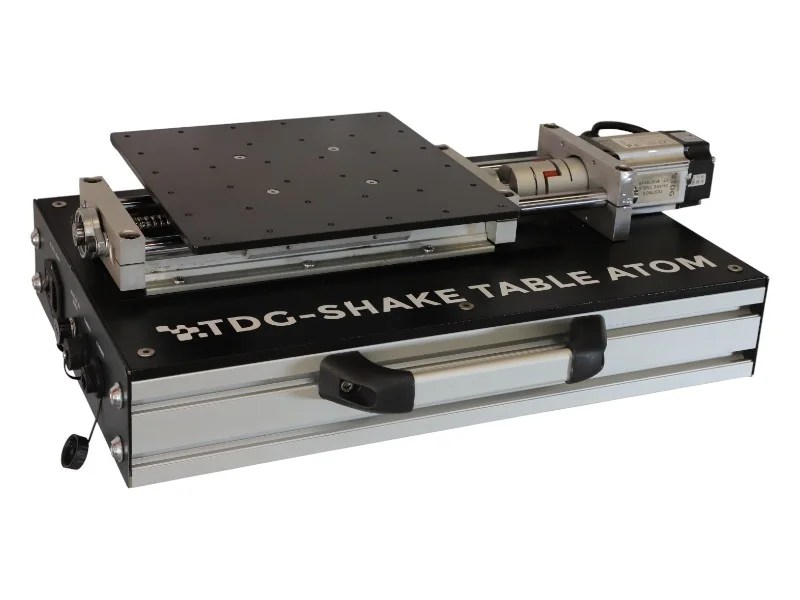
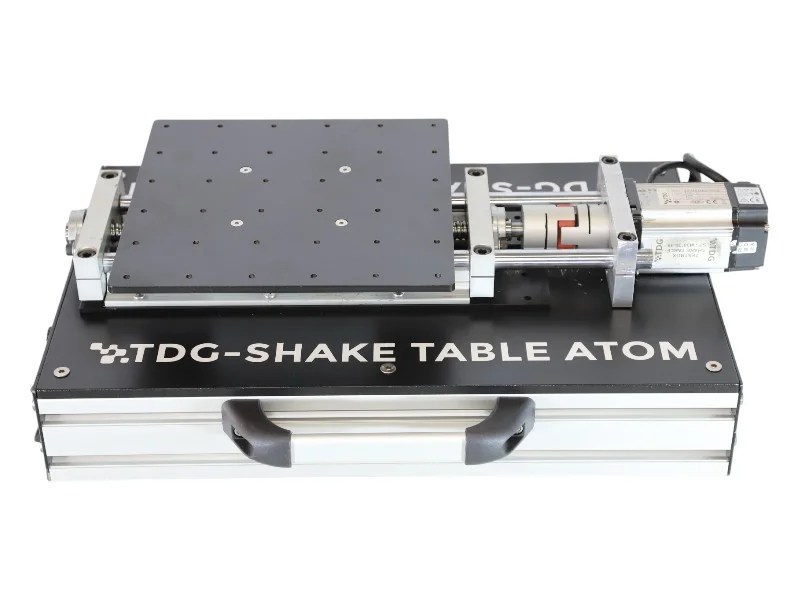
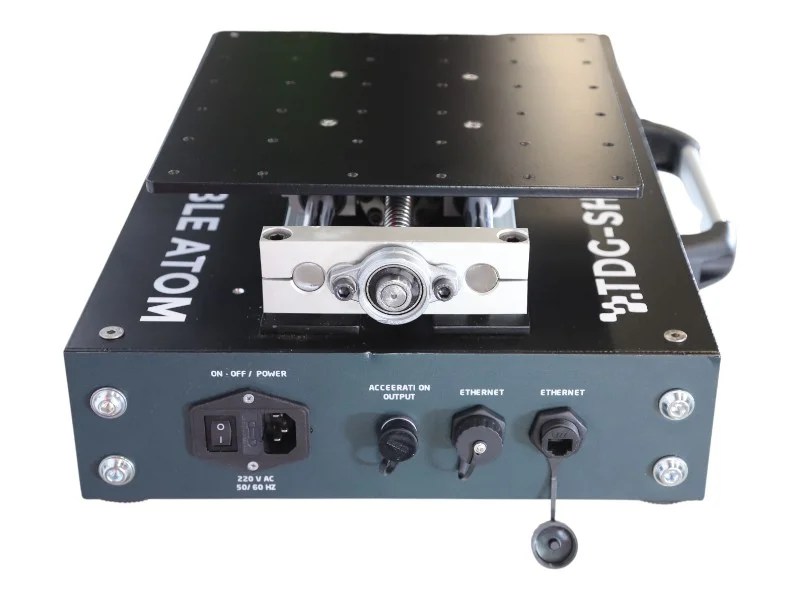
Compact, portable, and powerful, it is designed to simulate earthquake conditions in a controlled environment. It’s perfect for classrooms, labs, and science fairs, allowing students to observe how different structures respond to seismic forces. With a 50-kg payload capacity, this versatile tool brings earthquake science to life in a way that textbooks alone cannot.

Key Features of the ATOM Shake Table:
- Portable and Durable: Despite its robust construction, the ATOM Shake Table is lightweight and comes with a hard case equipped with wheels for easy transport. Move it effortlessly between classrooms or take it on the road for off-site demonstrations.
- 50-kg Payload Capacity: Capable of handling up to 50 kg, the ATOM Shake Table provides a powerful platform for testing various models and structures.
- Realistic Seismic Simulation: Achieve up to 1 g peak acceleration with a ±125 mm stroke at a 50-kg payload. This capability allows you to replicate a wide range of seismic events, from mild tremors to powerful quakes, giving students a real-world understanding of how different magnitudes affect structures.
- Smooth and Quiet Performance: Powered by advanced servo motor technology, the ATOM Shake Table delivers smooth and quiet operation, ensuring an uninterrupted learning experience.
- User-Friendly Software: Its control software, EASYTEST, is beautifully designed, simple to use, and incredibly user-friendly. EASYTEST controls everything from data logging to real-time visualizations, making the entire process seamless. There’s no need for additional software or post-processing—everything you need is right at your fingertips.
Educational Benefits: The ATOM Shake Table provides numerous educational benefits:
- Interactive Learning: Students can engage in hands-on experiments by building their own models and testing them under simulated earthquake conditions. This active learning approach reinforces theoretical concepts and fosters critical thinking.
- Visual and Practical Demonstrations: Instead of relying solely on textbooks and lectures, the ATOM Shake Table allows students to witness the effects of earthquakes in real-time, making abstract concepts more tangible.
- Collaborative Projects: The shake table is ideal for group projects, encouraging teamwork as students collaborate to design, build, and test their structures.
Why Choose QuakeLogic’s ATOM Shake Table? QuakeLogic is a leader in seismic testing technology, and the ATOM Shake Table reflects our commitment to quality and innovation. We understand the importance of providing educators with reliable tools that enhance learning, which is why the ATOM Shake Table is built to the highest standards. With QuakeLogic, you’re not just getting a product—you’re gaining a partner in education.
We also offer a modular PLEXIGLASS MODEL STRUCTURE and GEOBOX to simulate structural dynamics as well as liquefaction, landslides and lateral spreading. The photo below shows the GEOBOX.

Conclusion: Incorporating the ATOM Shake Table into your classroom can transform the way students understand and appreciate the science of earthquakes. It’s more than just a teaching tool; it’s a gateway to deeper learning and discovery.
Contact Us: For more information or to purchase the ATOM Shake Table for your classroom, reach out to us at sales@quakelogic.net. Let’s work together to make earthquake science an engaging and impactful part of your curriculum!
Last reviewed: 2026-07-04
Executive Summary
Shake tables reproduce controlled motion in the laboratory so engineers can evaluate components, assemblies, soil boxes, and structural models under seismic inputs. This article has been expanded as an engineering resource for readers evaluating shake tables concepts, instrumentation choices, and monitoring workflows. The discussion is educational and should be paired with project-specific review by qualified engineers, applicable codes, owner requirements, and equipment documentation.
Key Takeaways
- Define the engineering objective before selecting sensors, test equipment, trigger thresholds, or reporting workflows.
- Use calibrated instrumentation, documented installation practices, time synchronization, and traceable data handling where measurement quality matters.
- Interpret measured data in context: site conditions, structure type, noise environment, sampling rate, bandwidth, and boundary conditions all affect conclusions.
- Use authoritative references and project-specific criteria rather than relying on generic thresholds or unsupported performance claims.
Technical Explanation
In practical shake tables work, the engineering system is more than a sensor or a test platform. A credible workflow includes the measurement objective, instrument selection, mounting or boundary conditions, sampling and timing strategy, data validation, event or response detection, engineering review, and reporting. Weakness in any part of that chain can reduce confidence in the final interpretation.
For monitoring applications, engineers should document sensor orientation, coupling, environmental exposure, dynamic range, frequency bandwidth, data logger configuration, clock synchronization, communications, and maintenance procedures. For testing applications, engineers should document input motion, fixture design, payload properties, control limits, safety interlocks, acceptance criteria, and post-test data review.
Engineering Applications
| Application | Engineering Question | Typical Evidence Needed |
|---|---|---|
| Research and education | How does a structure, component, or sensor respond under controlled conditions? | Test plan, calibrated data, input motion, boundary conditions, and repeatable observations. |
| Critical infrastructure | Is the asset response normal, changing, or potentially unsafe after an event? | Baseline data, event records, thresholds, inspection workflow, and engineering sign-off. |
| Industrial facilities | Can monitoring support operational continuity and response decisions? | Site-specific criteria, reliable telemetry, alarm logic, maintenance records, and documented procedures. |
People Also Ask
What should be specified before buying equipment?
Specify the measurement objective, frequency range, amplitude range, environment, data format, timing needs, installation constraints, reporting requirements, and applicable standards or owner criteria.
Why do references and standards matter?
They provide terminology, acceptance criteria, test methods, and documentation expectations. They do not replace engineering judgment, but they reduce ambiguity and make results easier to review.
How should data quality be checked?
Review calibration status, timing, clipping, sensor orientation, signal-to-noise ratio, environmental artifacts, data completeness, and whether the record supports the engineering decision being made.
Related QuakeLogic Resources
- University of Washington Receives Next-Gen Seismic Testing Technology from QuakeLogic
- Instructions for Maintaining the ATOM Shake Table in a Lab Environment
- Discover the Most Advanced 1-Ton Uniaxial Shake Table
- Revolutionize Your Research with an Affordable Shake Table
- Related QuakeLogic products and technologies
- QuakeLogic Engineering Blog topic resources
References
Recommended Diagram or Download
Media placeholder: Add an original diagram showing the measurement chain from sensor or test platform to data acquisition, analysis, engineering interpretation, and reporting. Where this article becomes a buyer guide or application note, create a downloadable PDF version after engineering review.
Discuss a Monitoring or Testing Application
QuakeLogic supports seismic monitoring, earthquake early warning, structural health monitoring, infrasound monitoring, vibration monitoring, data acquisition, and shake table testing applications. For project-specific guidance, contact QuakeLogic with the asset type, measurement objective, site constraints, and required deliverables.
Discover more from QuakeLogic
Subscribe to get the latest posts sent to your email.
Topic cluster
Related engineering knowledge areas
- Earthquake EngineeringSeismic hazard, ground motion, structural response, fragility, and resilience guidance.
- Structural Health MonitoringMonitoring for bridges, buildings, dams, tunnels, industrial facilities, and resilient infrastructure.
- Earthquake Early WarningOn-site detection, alerting workflows, seismic switches, and critical infrastructure warning systems.
- Infrasound MonitoringLow-frequency acoustic sensing for environmental noise, blast, UAV, volcano, and defense applications.
Definitions and references
Terms, standards, and source cues
- seismic hazard: related to Earthquake Engineering in this QuakeLogic knowledge cluster.
- ground motion: related to Earthquake Engineering in this QuakeLogic knowledge cluster.
- SHM: related to Structural Health Monitoring in this QuakeLogic knowledge cluster.
- damage detection: related to Structural Health Monitoring in this QuakeLogic knowledge cluster.
- earthquake early warning: related to Earthquake Early Warning in this QuakeLogic knowledge cluster.
- seismic switch: related to Earthquake Early Warning in this QuakeLogic knowledge cluster.
- infrasound sensors: related to Infrasound Monitoring in this QuakeLogic knowledge cluster.
- low-frequency noise: related to Infrasound Monitoring in this QuakeLogic knowledge cluster.
Standards mentioned
- AC156 seismic qualification/testing references
Need project support?
Talk with QuakeLogic about monitoring, testing, or warning systems.
Get engineering guidance for seismic monitoring, structural health monitoring, infrasound, vibration, earthquake early warning, and shake table applications.

