Meet Moho UNO
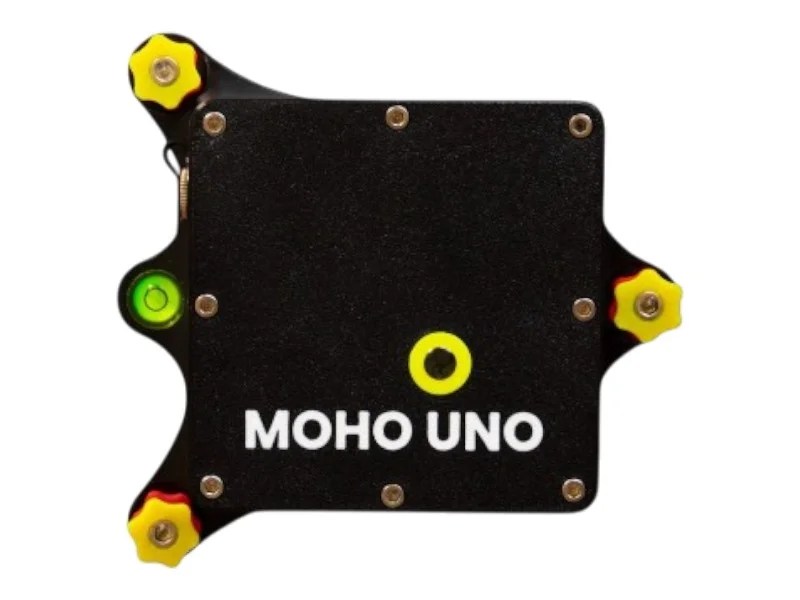
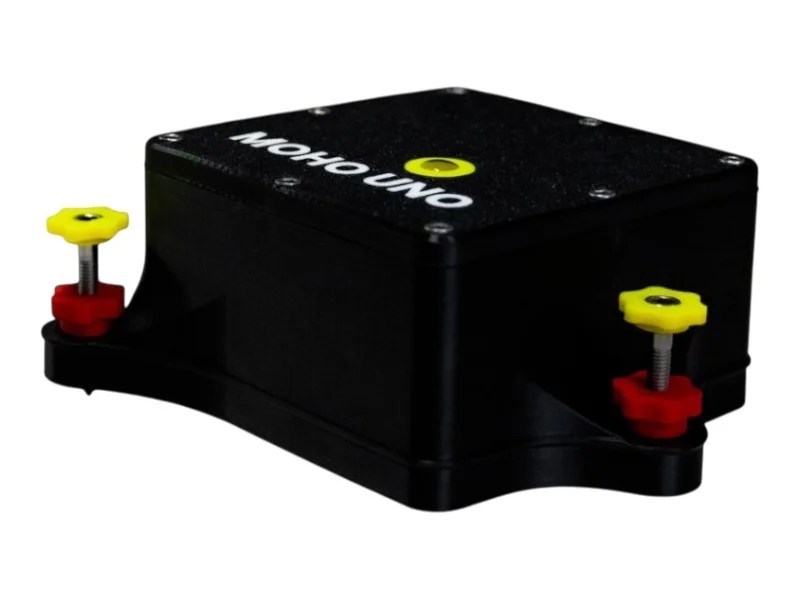
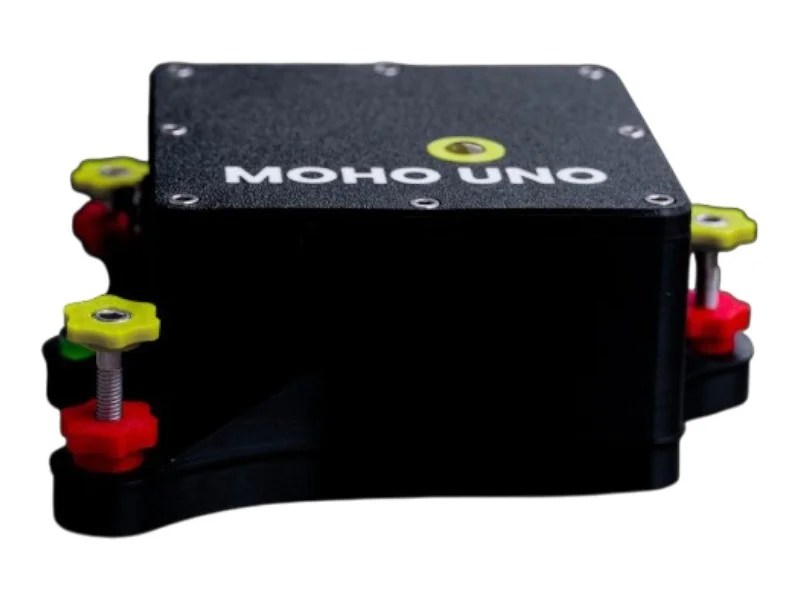
When it comes to seismic monitoring, reliability and ease of use matter. That’s why QuakeLogic created the Moho UNO — a compact, single-component seismograph designed for professionals, researchers, and organizations who need accurate seismic data without the hassle.
The Moho UNO combines professional-grade performance with a simple, plug-and-play design. Whether you’re running an earthquake early warning system, monitoring structural health, or conducting academic research, this device makes advanced seismic monitoring more accessible than ever.
Why Moho UNO Stands Out
- ✅ Compact & Portable – Lightweight and easy to transport.
- ✅ Quick Deployment – Set it up in minutes, not hours.
- ✅ High Sensitivity – Detects even the smallest ground motions.
- ✅ Flexible Working Modes – DataStreamer, Seedlink, Win2SDR, EwExport.
- ✅ Robust Design – Built with IP65-rated protection for reliability in the field.
- ✅ Real-Time Data – Streams seismic data in miniSEED format for professional use.
- ✅ Affordable – Professional-level performance at a cost that fits research and institutional budgets.
Practical Applications
The Moho UNO is already helping professionals around the world with:
- Earthquake Early Warning Systems – Deliver alerts faster and improve community safety.
- Structural Health Monitoring – Monitor dams, bridges, and buildings for vibrations and stress.
- Shake Intensity Research – Collect high-quality data for academic and government studies.
- Education & Training – Universities and labs can use Moho UNO as an affordable teaching tool.
Easy to Use
Forget about complex installations. With its built-in Wi-Fi connectivity and web-based interface, you can:
- Configure the device quickly.
- View live waveform graphs from any browser.
- Connect through TCP/UDP or SSH for advanced setups.
- Level and deploy the unit in minutes with its adjustable feet and bubble level.
Technical Highlights
- Input Channels: 1 (CH1)
- ADC: 24-bit Delta-Sigma (Cirrus Logic CS5532)
- Sample Rates: 50 / 100 / 200 SPS【58†source】
- Gain Settings: 2, 4, 8, 16, 32, 64
- Data Formats: miniSEED, Earthworm, WinSDR【58†source】
- Enclosure: IP65, PLA material
- Dimensions: 142 × 134 × 55 mm
- Weight: ~410–470 g (depending on sensor)【59†source】
- Power Consumption: Less than 2 W【58†source】
Why Choose QuakeLogic
QuakeLogic has over 15 years of expertise in seismic technology and hazard monitoring. With the Moho UNO, you get:
- A proven, reliable instrument.
- Strong customer support.
- Compatibility with global standards (MiniSEED, SeedLink, Earthworm).
- A tool trusted by professionals across industries.
Conclusion
The Moho UNO isn’t just a seismograph — it’s a smarter way to monitor, research, and protect against earthquakes and vibrations. Compact, powerful, and affordable, it’s the perfect choice for institutions, engineers, and researchers.
Compact. Reliable. Research-Grade.
MOHO UNO makes seismic monitoring simple, affordable, and network-ready. Contact us today for pricing.
Last reviewed: 2026-07-04
Executive Summary
Structural health monitoring uses sensors, data acquisition, signal processing, and engineering interpretation to track condition and detect abnormal response. This article has been expanded as an engineering resource for readers evaluating structural health monitoring concepts, instrumentation choices, and monitoring workflows. The discussion is educational and should be paired with project-specific review by qualified engineers, applicable codes, owner requirements, and equipment documentation.
Key Takeaways
- Define the engineering objective before selecting sensors, test equipment, trigger thresholds, or reporting workflows.
- Use calibrated instrumentation, documented installation practices, time synchronization, and traceable data handling where measurement quality matters.
- Interpret measured data in context: site conditions, structure type, noise environment, sampling rate, bandwidth, and boundary conditions all affect conclusions.
- Use authoritative references and project-specific criteria rather than relying on generic thresholds or unsupported performance claims.
Technical Explanation
In practical structural health monitoring work, the engineering system is more than a sensor or a test platform. A credible workflow includes the measurement objective, instrument selection, mounting or boundary conditions, sampling and timing strategy, data validation, event or response detection, engineering review, and reporting. Weakness in any part of that chain can reduce confidence in the final interpretation.
For monitoring applications, engineers should document sensor orientation, coupling, environmental exposure, dynamic range, frequency bandwidth, data logger configuration, clock synchronization, communications, and maintenance procedures. For testing applications, engineers should document input motion, fixture design, payload properties, control limits, safety interlocks, acceptance criteria, and post-test data review.
Engineering Applications
| Application | Engineering Question | Typical Evidence Needed |
|---|---|---|
| Research and education | How does a structure, component, or sensor respond under controlled conditions? | Test plan, calibrated data, input motion, boundary conditions, and repeatable observations. |
| Critical infrastructure | Is the asset response normal, changing, or potentially unsafe after an event? | Baseline data, event records, thresholds, inspection workflow, and engineering sign-off. |
| Industrial facilities | Can monitoring support operational continuity and response decisions? | Site-specific criteria, reliable telemetry, alarm logic, maintenance records, and documented procedures. |
People Also Ask
What should be specified before buying equipment?
Specify the measurement objective, frequency range, amplitude range, environment, data format, timing needs, installation constraints, reporting requirements, and applicable standards or owner criteria.
Why do references and standards matter?
They provide terminology, acceptance criteria, test methods, and documentation expectations. They do not replace engineering judgment, but they reduce ambiguity and make results easier to review.
How should data quality be checked?
Review calibration status, timing, clipping, sensor orientation, signal-to-noise ratio, environmental artifacts, data completeness, and whether the record supports the engineering decision being made.
Related QuakeLogic Resources
- WHAT YOU NEED TO KNOW ABOUT PROPER MONITORING OF BRIDGES FOR EARLY DAMAGE DETECTION AND INTERVENTION
- Insights into Blast Vibration Monitoring and Infrasound Sensitivity
- Rotational Seismology with Tellus-R Seismometer
- AGING DAMS, CLIMATE CHANGE AND EARTHQUAKES – HOW CAN MONITORING HELP TO PREVENT DISASTERS?
- Related QuakeLogic products and technologies
- QuakeLogic Engineering Blog topic resources
References
Recommended Diagram or Download
Media placeholder: Add an original diagram showing the measurement chain from sensor or test platform to data acquisition, analysis, engineering interpretation, and reporting. Where this article becomes a buyer guide or application note, create a downloadable PDF version after engineering review.
Discuss a Monitoring or Testing Application
QuakeLogic supports seismic monitoring, earthquake early warning, structural health monitoring, infrasound monitoring, vibration monitoring, data acquisition, and shake table testing applications. For project-specific guidance, contact QuakeLogic with the asset type, measurement objective, site constraints, and required deliverables.