
Author: QuakeLogic

Engineering knowledge hub

QuakeLogic

Curated QuakeLogic articles, application notes, and technical explainers for engineering teams.

Areas of expertiseSeismic monitoring, structural health monitoring, testing systems, data acquisition, and applied engineering education.
Data center seismic monitoring system with seismic sensors protecting critical server infrastructure.
Technical Note

Data Center Seismic Monitoring

Data center seismic monitoring helps protect critical infrastructure from earthquake-related risks. Data centers depend on stable equipment, reliable power, and continuous network access. Even moderate ground movement can affect sensitive systems, especially...

Nov 6, 20267 min read

Cheat Sheet: Comprehensive California S-Corp Requirements

Checklist of California S-Corp filing forms, fees and deadlines

In short: A California S-Corp must file Articles of Incorporation (Form ARTS-GS, $100), a Statement of Information (SI-200, $25, within 90 days and then annually), Form 100S by March 15 with an $800 minimum franchise tax, quarterly 100-ES estimated payments, federal Form 2553 to elect S status, Form 1120S and Schedule K-1s, plus EDD registration (DE 1) within 15 days of hiring and a CDTFA sales tax permit before trading.

1. Formation Requirements

  • File Articles of Incorporation:
  • Form: Articles of Incorporation (Form ARTS-GS)
  • Deadline: Upon creation
  • Fee: $100
  • Website: California Secretary of State
  • Appoint a Registered Agent:
  • Deadline: Upon creation
  • Initial Statement of Information:
  • Form: Statement of Information (Form SI-200)
  • Deadline: Within 90 days of formation
  • Fee: $25
  • Website: California Secretary of State

2. Annual Requirements

  • Annual Statement of Information:
  • Form: Statement of Information (Form SI-200)
  • Deadline: Annually by the end of the anniversary month of incorporation
  • Fee: $25
  • Website: California Secretary of State
  • Franchise Tax:
  • Form: California Form 100S
  • Deadline: March 15th (for calendar year filers)
  • Minimum Tax: $800 annually
  • Website: California Franchise Tax Board
  • California S-Corp Tax Return:
  • Form: Form 100S (California S Corporation Franchise or Income Tax Return)
  • Deadline: March 15th (for calendar year filers)
  • Fee: Based on net income
  • Website: California Franchise Tax Board

3. Quarterly and Bi-Annual Requirements

  • Estimated Tax Payments:
  • Form: Form 100-ES
  • Deadline: April 15th, June 15th, September 15th, December 15th
  • Fee: Based on estimated tax
  • Website: California Franchise Tax Board

4. Federal Requirements

  • S Corporation Election:
  • Form: IRS Form 2553
  • Deadline: No more than 2 months and 15 days after the beginning of the tax year the election is to take effect
  • Website: IRS Form 2553
  • Federal Tax Return:
  • Form: IRS Form 1120S
  • Deadline: March 15th (for calendar year filers)
  • Fee: Based on net income
  • Website: IRS Form 1120S
  • Shareholder K-1s:
  • Form: IRS Schedule K-1 (Form 1120S)
  • Deadline: March 15th (to shareholders)
  • Website: IRS Schedule K-1 (Form 1120S)

5. Employment Requirements

  • California Employment Development Department (EDD):
  • Form: DE 1 (Registration Form for Commercial Employers)
  • Deadline: Within 15 days of employing first worker
  • Website: California EDD
  • Ongoing Reporting: DE 9 and DE 9C quarterly
  • Website: California EDD Quarterly Reporting

6. Sales and Use Tax Requirements

7. Government Contracting Requirements

  • SAM Registration:
  • Form: System for Award Management (SAM)
  • Renewal: Annually
  • Deadline: Based on the initial registration date
  • Fee: Free
  • Website: SAM Registration
  • California e-Procure Registration:
  • Form: Cal eProcure
  • Renewal: Annually
  • Deadline: Based on the initial registration date
  • Fee: Free
  • Website: California e-Procure

Comprehensive Schedule

RequirementFormFrequencyDeadlineFeeWebsite
Articles of IncorporationARTS-GSOnceUpon creation$100Link
Initial Statement of InformationSI-200OnceWithin 90 days of formation$25Link
Annual Statement of InformationSI-200AnnuallyEnd of anniversary month$25Link
Franchise TaxForm 100SAnnuallyMarch 15thMinimum $800Link
California S-Corp Tax ReturnForm 100SAnnuallyMarch 15thBased on net incomeLink
Estimated Tax PaymentsForm 100-ESQuarterlyApril 15th, June 15th, September 15th, December 15thBased on estimated taxLink
S Corporation ElectionIRS Form 2553OnceNo more than 2 months and 15 days after the beginning of the tax year–Link
Federal Tax ReturnIRS Form 1120SAnnuallyMarch 15thBased on net incomeLink
Shareholder K-1sIRS Schedule K-1 (1120S)AnnuallyMarch 15th–Link
California EDD RegistrationDE 1OnceWithin 15 days of employing first worker–Link
California EDD Quarterly ReportsDE 9 and DE 9CQuarterlyLast day of the month following the end of the quarter–Link
California Sales Tax PermitCDTFA-400-SPOnceBefore commencing business–Link
California Sales Tax FilingsOnline (CDTFA)Quarterly or AnnuallyBased on revenue and CDTFA schedule–Link
SAM RegistrationSAMAnnuallyBased on initial registration dateFreeLink
California e-Procure RegistrationCal eProcureAnnuallyBased on initial registration dateFreeLink

Notes:

  • Ensure to check for any changes in forms or deadlines as they can be updated by the respective authorities.
  • Additional local permits and licenses might be required based on the specific business activities and location.

This information is brought to you by QuakeLogic. For sales contact us at sales@quakelogic.net

Key Takeaways

  • Formation: Articles of Incorporation ARTS-GS ($100), registered agent, and Statement of Information SI-200 ($25) within 90 days.
  • Annual: SI-200 by the anniversary month ($25) and Form 100S by March 15 with an $800 minimum franchise tax.
  • Quarterly estimated taxes via Form 100-ES are due April 15, June 15, September 15 and December 15.
  • Federal: IRS Form 2553 within 2 months 15 days of the tax year start, Form 1120S and Schedule K-1s by March 15.
  • Employers register with EDD (DE 1) within 15 days of the first hire and file DE 9 and DE 9C quarterly.

Frequently Asked Questions

What forms are required to form an S-Corp in California?

To form a California S-Corp you file Articles of Incorporation (Form ARTS-GS) with the Secretary of State for a $100 fee, appoint a registered agent at creation, and file an initial Statement of Information (Form SI-200, $25) within 90 days. To be taxed as an S corporation you then file IRS Form 2553 no later than 2 months and 15 days after the start of the tax year the election should take effect.

What is the minimum franchise tax for a California S-Corp?

California imposes a minimum franchise tax of $800 per year on S corporations, paid with Form 100S, the California S Corporation Franchise or Income Tax Return, due March 15 for calendar-year filers. Tax above the minimum is based on net income. Estimated payments are made quarterly with Form 100-ES on April 15, June 15, September 15 and December 15.

When are California S-Corp tax returns due?

For calendar-year filers, the state Form 100S and the federal Form 1120S are both due March 15, and Schedule K-1s must be issued to shareholders by the same date. The annual Statement of Information (SI-200) is due by the end of the anniversary month of incorporation, and quarterly estimated payments fall on April 15, June 15, September 15 and December 15.

What employment filings does a California S-Corp need when it hires its first employee?

Within 15 days of employing the first worker the corporation must register with the California Employment Development Department using Form DE 1, the Registration Form for Commercial Employers. After that, it files the quarterly wage and contribution reports DE 9 and DE 9C, due the last day of the month following the end of each quarter, through the EDD's online reporting system.

What registrations does a California S-Corp need to sell to government agencies?

To pursue federal contracts the corporation registers in the System for Award Management (SAM), which is free and renewed annually from the initial registration date. For California state contracts it registers in Cal eProcure, also free with annual renewal. Both registrations are prerequisites before bidding, in addition to standard tax, employment and sales permit compliance.

Need help with a project? QuakeLogic designs and supplies seismic monitoring, earthquake early warning, structural health monitoring, infrasound, and shake table systems. Browse QuakeLogic products or contact our engineering team with your site, structure, or test requirements.
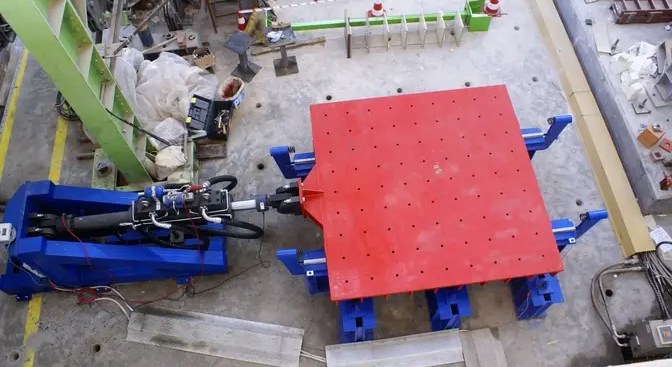
Shake Tables in Structural Engineering: Types and Applications

High-capacity QuakeLogic shake table used for seismic testing of structural models

In short: Shake tables in structural engineering are platforms that reproduce earthquake ground motion so engineers can observe how buildings, bridges and equipment respond before a real event. They come in electrodynamic, hydraulic and servo-hydraulic types, and in uniaxial (one axis) or biaxial (two simultaneous axes) configurations. Test results feed building codes, verify retrofits of older structures and qualify critical infrastructure such as bridges, dams and nuclear facilities.

In the realm of structural engineering, ensuring safety and resilience in construction is of utmost importance. One of the most vital tools aiding engineers in this endeavor is the shake table. Shake tables are pivotal in the seismic testing of structures, providing invaluable data that helps engineers design buildings capable of withstanding earthquakes. This blog explores the intricacies of shake tables, their functions, their significance in structural engineering, and the differences between uniaxial and biaxial shake tables.

What is a Shake Table?

A shake table is a device used to simulate the ground motions produced by earthquakes. By replicating the oscillatory motion of seismic waves, shake tables enable engineers to observe how structures respond to these forces. This testing is essential for understanding the behavior of buildings and other structures during seismic events and for developing strategies to enhance their earthquake resistance.

Types of Shake Tables

  1. Electrodynamic Shake Tables:
    These tables use electromagnets to generate motion. Known for their precision, they are often used for smaller-scale models and detailed studies.
  2. Hydraulic Shake Tables:
    Driven by hydraulic actuators, these tables are suitable for larger structures and more significant displacement tests. They are highly effective in simulating a wide range of seismic activities.
  3. Servo-Hydraulic Shake Tables:
    Combining the benefits of hydraulic systems with advanced control systems, these tables offer precise and powerful simulations. They are commonly used in both academic research and industrial applications.

Uniaxial vs. Biaxial Shake Tables

Uniaxial Shake Tables:

Uniaxial shake tables simulate ground motion along a single axis, typically either the X or Y axis. They are simpler and more cost-effective, making them ideal for basic testing and educational purposes. However, their limitation to one axis means they cannot fully replicate the complex, multidirectional nature of real earthquakes.

Biaxial Shake Tables:

Biaxial shake tables can simulate ground motion along two axes simultaneously, usually the X and Y axes. This capability provides a more comprehensive analysis of how structures will behave during seismic events. Biaxial tables offer a more realistic simulation of earthquake conditions, making them invaluable for advanced research and critical infrastructure testing.

The Role of Shake Tables in Structural Engineering

Seismic Testing

Shake tables allow engineers to subject structural models to realistic earthquake scenarios. By analyzing the performance of these models, engineers can identify potential weaknesses and improve design strategies. Seismic testing on shake tables provides critical data that informs building codes and construction practices, ensuring structures are built to withstand future earthquakes.

Research and Development

In research settings, shake tables are indispensable. They enable the exploration of new materials, innovative design concepts, and construction techniques. Universities and research institutions worldwide utilize shake tables to push the boundaries of structural engineering knowledge.

Performance Evaluation

Beyond initial design and research, shake tables are used to evaluate the performance of existing structures. Retrofitting and upgrading older buildings to meet modern seismic standards often involve shake table testing to ensure the effectiveness of proposed improvements.

Advantages of Using Shake Tables

  1. Realistic Simulation:
    Shake tables provide a highly realistic simulation of earthquake motions, offering valuable insights that static analysis cannot.
  2. Safety and Risk Reduction:
    By identifying potential failures before they occur in real-world scenarios, shake table testing significantly reduces the risk of structural collapse and enhances public safety.
  3. Cost-Effectiveness:
    Although constructing and maintaining shake tables can be expensive, the cost is justified by the savings from preventing structural failures and minimizing damage during actual earthquakes.
  4. Regulatory Compliance:
    Shake table testing helps ensure that structures comply with stringent building codes and regulations, promoting safer construction practices.

Applications of Shake Tables

Academic Research

Universities and academic institutions use shake tables to conduct fundamental research in seismic engineering. These studies contribute to the development of new theories and models that advance the field.

Commercial Construction

In the commercial sector, shake tables are used to test the seismic resilience of various building designs. This testing is crucial for developing safe and reliable structures, particularly in earthquake-prone regions.

Government and Regulatory Bodies

Government agencies and regulatory bodies utilize shake table data to formulate and update building codes and standards. This ensures that new constructions adhere to the latest safety guidelines.

Industrial Applications

Industries involved in infrastructure development, such as bridges, dams, and nuclear facilities, rely on shake table testing to evaluate the seismic performance of their projects. This testing is essential for ensuring the structural integrity and safety of critical infrastructure.

Conclusion

Shake tables are a cornerstone of modern structural engineering, providing essential data that helps engineers design safer and more resilient buildings. Through realistic simulation of earthquake motions, shake tables enable comprehensive seismic testing, research, and performance evaluation. As the field of structural engineering continues to evolve, the role of shake tables in enhancing public safety and advancing construction practices remains indispensable. By leveraging the capabilities of shake tables, engineers can build a safer future, one structure at a time.

QL ATOM youtube for "Unlocking Seismic Safety: The Power of Shake Tables in Structural Engineering"

For Sales, Contact Us

Join industry leaders in leveraging this powerful tool to drive innovation and safety in engineering. For more information on how our tables can benefit your projects and research initiatives, visit us

Small and medium size shake tables

Large scale shake tables

email us scaled for "Revolutionize Your Research with an Affordable Shake Table"

Xontact us at sales@quakelogic.net or or call us at +1-916-899-0391

Watch our YouTube videos at YouTube/QuakeLogic.

Key Takeaways

  • Electrodynamic tables use electromagnets for precise small-scale tests; hydraulic and servo-hydraulic tables handle larger structures and displacements.
  • Uniaxial tables shake along one axis and cost less; biaxial tables drive X and Y simultaneously for more realistic earthquake simulation.
  • Shake table data informs building codes, retrofit verification of older buildings and seismic qualification of bridges, dams and nuclear facilities.
  • Realistic motion simulation reveals failure modes that static analysis cannot, reducing collapse risk and supporting regulatory compliance.

Frequently Asked Questions

What is a shake table used for in structural engineering?

A shake table simulates the oscillatory ground motion of an earthquake so engineers can observe how a structural model or piece of equipment responds. Uses include seismic testing of new designs, research into materials and construction techniques, evaluating retrofits of existing buildings, and generating data that informs building codes and regulatory standards in earthquake-prone regions.

What is the difference between uniaxial and biaxial shake tables?

A uniaxial shake table moves along a single axis, usually X or Y; it is simpler and cheaper and suits basic testing and teaching but cannot reproduce multidirectional earthquake motion. A biaxial table drives two axes simultaneously, typically X and Y, giving a more realistic simulation for advanced research and critical infrastructure testing where directional effects matter.

What types of shake tables are there?

The main types are electrodynamic tables, which use electromagnets and are prized for precision in smaller-scale models; hydraulic tables, driven by hydraulic actuators for larger structures and bigger displacements; and servo-hydraulic tables, which pair hydraulic power with advanced control for precise, powerful simulations in academic and industrial labs. Tables are further classed by axis count as uniaxial, biaxial or triaxial.

Why is shake table testing worth the cost?

Building and maintaining a shake table is expensive, but it is the only way to subject a structure to realistic earthquake loading before an actual event. Testing exposes weaknesses that static analysis misses, reduces the risk of collapse, validates retrofits and demonstrates compliance with seismic building codes. The avoided cost of structural failure and post-earthquake damage justifies the investment.

Who uses shake tables?

Universities use shake tables for fundamental seismic engineering research. Commercial builders test the resilience of building designs in earthquake-prone regions. Government and regulatory bodies use test data to write and update building codes. Industries responsible for bridges, dams and nuclear facilities rely on shake table testing to verify the seismic performance of critical infrastructure before and after construction.

Need help with a project? QuakeLogic designs and supplies seismic monitoring, earthquake early warning, structural health monitoring, infrasound, and shake table systems. Browse QuakeLogic products or contact our engineering team with your site, structure, or test requirements.

Biaxial Shake Table for Seismic Testing Across Industries

QuakeLogic biaxial shake table with two-axis actuators for seismic testing

In short: A biaxial shake table reproduces earthquake motion along two axes simultaneously, so engineers can test buildings, bridge and dam models, soil-structure interaction, materials, aerospace and mechanical components, and defense equipment under realistic dynamic loads. QuakeLogic's table uses high-performance actuators, advanced controls that run waveforms, sine sweeps and complex sequences, and a simple interface; users include Caltech, University of Nevada, Nokia Bell Labs and Nantes University.

At QuakeLogic, we are dedicated to pushing the boundaries of innovation and safety in engineering. Our Biaxial Shake Table is a testament to this commitment, offering unparalleled capabilities for seismic testing and dynamic analysis. This state-of-the-art equipment is designed to meet the rigorous demands of various industries, providing precise and customizable simulation of seismic events. Let’s explore the features, potential use cases, and benefits of our Biaxial Shake Table across different sectors.

Visit the product page HERE.

bi axial youtube 3 for "Biaxial Shake Table: Revolutionizing Seismic Testing Across Industries"

Key Features

  • High-Performance Actuators: The Biaxial Shake Table is equipped with advanced actuators that deliver accurate and dynamic seismic simulations, ensuring reliable data for analysis.
  • Advanced Control Systems: Our control systems allow for precise and customizable test scenarios, accommodating a wide range of research and testing needs.
  • User-Friendly Interface: Designed with ease of use in mind, the interface simplifies the setup and operation, making it accessible to users of all experience levels.
  • Versatile Vibration Patterns: Easily create different vibration patterns, including waveforms, sine waves, and other complex sequences to simulate real-world conditions.

Potential Use Cases

Earthquake Engineering

  • Building Safety: Test and evaluate the seismic resilience of buildings, ensuring they meet safety standards and can withstand earthquakes.
  • Infrastructure Analysis: Assess the stability and performance of bridges, dams, and other critical infrastructure during seismic events.

Structural Engineering

  • Material Testing: Analyze the behavior of various construction materials under dynamic loads to optimize structural designs.
  • Retrofitting Solutions: Develop and test retrofitting techniques to enhance the earthquake resistance of existing structures.

Geotechnical Engineering

  • Soil-Structure Interaction: Study how soil and foundation interact during seismic activity to improve foundation designs.
  • Landslide Mitigation: Investigate the effects of earthquakes on slopes and develop effective landslide prevention strategies.

Aerospace Engineering

  • Component Testing: Evaluate the performance of aerospace components under dynamic loads, ensuring they can withstand extreme conditions.
  • Vibration Analysis: Conduct detailed vibration analysis to improve the design and safety of aerospace structures.

Mechanical Engineering

  • Machine Performance: Test the resilience and reliability of mechanical systems and machinery under dynamic conditions.
  • Vibration Isolation: Develop and test vibration isolation techniques to protect sensitive equipment from seismic activity.

Material Engineering

  • Material Fatigue: Study the fatigue behavior of materials under cyclic loads to enhance their durability and performance.
  • Innovative Materials: Test new and advanced materials for their seismic resilience and dynamic properties.

Defense Industry

  • Equipment Testing: Ensure military equipment and installations can withstand seismic events and other dynamic loads.
  • Infrastructure Safety: Evaluate the seismic resilience of critical defense infrastructure to maintain operational readiness during and after seismic events.

Why Choose QuakeLogic’s Biaxial Shake Table?

  • Precision and Accuracy: Our shake table delivers precise and accurate simulations, providing reliable data for research and testing.
  • Versatility: Suitable for a wide range of industries and applications, our shake table can handle diverse testing requirements.
  • Innovation and Reliability: Trusted by leading institutions and organizations worldwide, our shake table represents the pinnacle of innovation and reliability in seismic testing.
bia axial pdf for "Biaxial Shake Table: Revolutionizing Seismic Testing Across Industries"

Recent Clients

We are proud to have our Biaxial Shake Table selected by esteemed institutions and organizations, including:

  • NOKIA-BELLS-LAB, USA
  • Caltech University, USA
  • University of Nevada, USA
  • Southern Illinois University, USA
  • American University of Sharjah, UAE
  • Krakov University of Technology, Poland
  • Nantes University in France
  • And many others!

For Sales, Contact Us

Join industry leaders in leveraging this powerful tool to drive innovation and safety in engineering. For more information on how our Biaxial Shake Table can benefit your projects and research initiatives, contact us at sales@quakelogic.net or call us at +1-916-899-0391

QL customer satisfaction for "Biaxial Shake Table: Revolutionizing Seismic Testing Across Industries"

Conclusion

QuakeLogic’s Biaxial Shake Table is an indispensable tool for advancing research and safety across various engineering disciplines. With its advanced features and versatile applications, it stands as a cornerstone in the pursuit of seismic resilience and dynamic analysis. Discover the future of seismic testing with QuakeLogic.

Key Takeaways

  • Two-axis motion with high-performance actuators and a control system that runs recorded earthquake waveforms, sine waves and custom sequences.
  • Earthquake and structural engineering uses: building seismic resilience, bridge and dam stability, material behavior and retrofit validation.
  • Geotechnical uses: soil-structure interaction and landslide mitigation studies under simulated shaking.
  • Aerospace, mechanical, materials and defense uses: component qualification, vibration isolation, fatigue under cyclic loads and equipment readiness.
  • Installed at Nokia Bell Labs, Caltech, University of Nevada, Southern Illinois University, American University of Sharjah, Krakow and Nantes.

Frequently Asked Questions

What is a biaxial shake table used for?

A biaxial shake table is used to subject structures, models and equipment to controlled two-axis seismic motion. Applications include testing building seismic resilience, bridge and dam stability, material behavior under dynamic load, retrofit techniques, soil-structure interaction, aerospace and mechanical component qualification, vibration isolation, material fatigue and the readiness of defense equipment during earthquakes.

How does a biaxial shake table differ from a uniaxial one?

A biaxial shake table moves the test platform along two orthogonal horizontal axes at the same time, while a uniaxial table moves along a single axis. Two-axis motion reproduces real earthquake ground motion more faithfully, which is why standards such as AC156 prefer it for qualifying components. Uniaxial tables remain adequate for simpler specimens or single-direction studies.

What motion inputs can QuakeLogic's biaxial shake table run?

QuakeLogic's biaxial shake table can run recorded earthquake waveforms, sine waves and other complex sequences. Its advanced control system allows precise, customizable test scenarios, and the user-friendly interface simplifies setup and operation so researchers of any experience level can configure and execute tests.

Which institutions use QuakeLogic's biaxial shake table?

QuakeLogic's biaxial shake table has been selected by Nokia Bell Labs, Caltech, the University of Nevada and Southern Illinois University in the United States, the American University of Sharjah in the UAE, Krakow University of Technology in Poland and Nantes University in France, among others.

Can a biaxial shake table test non-civil components such as aerospace parts?

Yes. Beyond civil structures, a biaxial shake table is used to evaluate aerospace components under dynamic loads, perform vibration analysis of aerospace structures, test the resilience of mechanical systems and machinery, develop vibration isolation for sensitive equipment, study material fatigue under cyclic loading and verify that military equipment and installations withstand seismic and other dynamic events.

Need help with a project? QuakeLogic designs and supplies seismic monitoring, earthquake early warning, structural health monitoring, infrasound, and shake table systems. Browse QuakeLogic products or contact our engineering team with your site, structure, or test requirements.