QuakeLogic Blog Archive

ACEBOX: Ultimate High-Fidelity Solution for Comprehensive Building Seismic Monitoring

acebox 1 for "ACEBOX: Ultimate High-Fidelity Solution for Comprehensive Building Seismic Monitoring"

QuakeLogic proudly presents the ACEBOX accelerographs, the ultimate solution for comprehensive building seismic monitoring. Our high-fidelity accelerographs feature triaxial force balance accelerometers, an integrated datalogger, GPS, and Ethernet capabilities.

These sophisticated instruments are strategically placed at the roof, mid-level, and ground level of buildings to ensure accurate and reliable seismic data collection, as shown in the schematic below.

The ACEBOX is a compact all-in-one high-resolution accelerograph based on the reliable and field-proven SL06 recorder. It embeds three force balance accelerometers of the SA10 series, allowing for efficient and fast deployment. Within seconds of activation, the system is operational. Encased in robust, corrosion-resistant aluminum, the ACEBOX can be deployed in the field indefinitely with minimal environmental protection. Its weight and durability guarantee excellent ground coupling, and flexible data connectivity allows direct linkage to your central observatory. The ultra-fast SeedLink server accelerates data streaming up to 10 packets per second, making the ACEBOX the best option for Earthquake Early Warning Systems (EEWS).

acebox 1 for "ACEBOX: Ultimate High-Fidelity Solution for Comprehensive Building Seismic Monitoring"

Key features of the SARA ACEBOX include:

  • Ultra-low noise design with an embedded FBA sensor featuring ultra-low noise and cross-axis sensitivity
  • GPS synchronization with options for PPS or NTP when GPS is unavailable
  • Wide power supply voltage range and internal NiMh battery for safe shutdown on power failure
  • Edge computing capabilities, including alerting algorithms like P-wave analysis
  • Ultra-fast SeedLink streaming protocol or custom protocols with substreaming capability
  • Networking options including TCP, SSH, FTP, HTTP, ModBus, MQTT, Telnet, Telegram, and SMS
  • VPN readiness for operation behind firewalls and NAT filters
  • High-capacity local data storage and real-time measurements according to the UNI9916 norm
  • Automatic frequency peak-picking with frequency shifting alarm reports
  • Easy web browser configuration and management
  • IP68 protection grade for harsh environments

Applications for the ACEBOX include EEWS, aftershock studies, reservoir microseismic monitoring, operational modal analysis (OMA), and structural health monitoring (SHM).

The GUI of ACEBOX is extremely easy to use and navigate.

Our accelerographs are designed to meet and exceed industry code regulations and standards, ensuring the highest level of safety and performance. The ACEBOX provides precise data essential for structural health monitoring and safety assessments, making it an invaluable tool for engineers and building managers.

For more information and sales inquiries, please contact us at sales@quakelogic.net or visit our product website at SARA ACEBOX Accelerographs.

Seismic monitoring instrumentation for "ACEBOX: Ultimate High-Fidelity Solution for Comprehensive Building Seismic Monitoring"
Screenshot

About QuakeLogic

QuakeLogic is a leading provider of advanced seismic monitoring solutions, offering a range of products and services designed to enhance the accuracy and efficiency of seismic data acquisition and analysis. Our innovative technologies and expert support help organizations worldwide to better understand and mitigate the impacts of seismic events.

Contact Information
Emailto:sales@quakelogic.net
Phone: +1-916-899-0391
WhatsApp: +1-650-353-8627
Website: www.quakelogic.net

For more information about our products and services, please visit our website or contact our sales team. We are here to help you with all your seismic monitoring needs.

Thank you for choosing QuakeLogic. We look forward to assisting you with your seismic monitoring projects.

Last reviewed: 2026-07-04

Executive Summary

Data acquisition systems synchronize, digitize, store, transmit, and quality-check sensor signals used in seismic, vibration, acoustic, and SHM workflows. This article has been expanded as an engineering resource for readers evaluating data acquisition systems concepts, instrumentation choices, and monitoring workflows. The discussion is educational and should be paired with project-specific review by qualified engineers, applicable codes, owner requirements, and equipment documentation.

Key Takeaways

  • Define the engineering objective before selecting sensors, test equipment, trigger thresholds, or reporting workflows.
  • Use calibrated instrumentation, documented installation practices, time synchronization, and traceable data handling where measurement quality matters.
  • Interpret measured data in context: site conditions, structure type, noise environment, sampling rate, bandwidth, and boundary conditions all affect conclusions.
  • Use authoritative references and project-specific criteria rather than relying on generic thresholds or unsupported performance claims.

Technical Explanation

In practical data acquisition systems work, the engineering system is more than a sensor or a test platform. A credible workflow includes the measurement objective, instrument selection, mounting or boundary conditions, sampling and timing strategy, data validation, event or response detection, engineering review, and reporting. Weakness in any part of that chain can reduce confidence in the final interpretation.

For monitoring applications, engineers should document sensor orientation, coupling, environmental exposure, dynamic range, frequency bandwidth, data logger configuration, clock synchronization, communications, and maintenance procedures. For testing applications, engineers should document input motion, fixture design, payload properties, control limits, safety interlocks, acceptance criteria, and post-test data review.

Engineering Applications

ApplicationEngineering QuestionTypical Evidence Needed
Research and educationHow does a structure, component, or sensor respond under controlled conditions?Test plan, calibrated data, input motion, boundary conditions, and repeatable observations.
Critical infrastructureIs the asset response normal, changing, or potentially unsafe after an event?Baseline data, event records, thresholds, inspection workflow, and engineering sign-off.
Industrial facilitiesCan monitoring support operational continuity and response decisions?Site-specific criteria, reliable telemetry, alarm logic, maintenance records, and documented procedures.

People Also Ask

What should be specified before buying equipment?

Specify the measurement objective, frequency range, amplitude range, environment, data format, timing needs, installation constraints, reporting requirements, and applicable standards or owner criteria.

Why do references and standards matter?

They provide terminology, acceptance criteria, test methods, and documentation expectations. They do not replace engineering judgment, but they reduce ambiguity and make results easier to review.

How should data quality be checked?

Review calibration status, timing, clipping, sensor orientation, signal-to-noise ratio, environmental artifacts, data completeness, and whether the record supports the engineering decision being made.

Related QuakeLogic Resources

References

Recommended Diagram or Download

Media placeholder: Add an original diagram showing the measurement chain from sensor or test platform to data acquisition, analysis, engineering interpretation, and reporting. Where this article becomes a buyer guide or application note, create a downloadable PDF version after engineering review.

Discuss a Monitoring or Testing Application

QuakeLogic supports seismic monitoring, earthquake early warning, structural health monitoring, infrasound monitoring, vibration monitoring, data acquisition, and shake table testing applications. For project-specific guidance, contact QuakeLogic with the asset type, measurement objective, site constraints, and required deliverables.

250-kg Uniaxial Shake Table

tdg0 600x600 for "250-kg Uniaxial Shake Table"

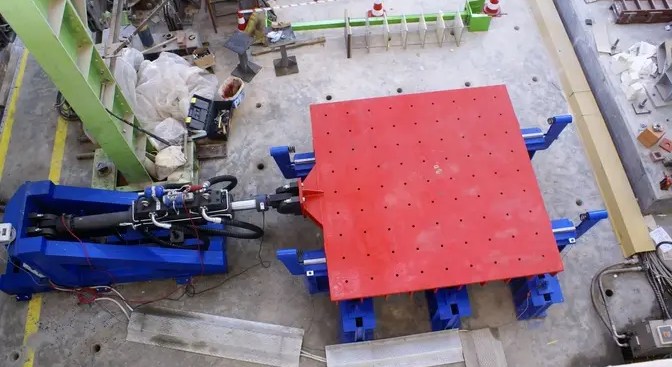
The QuakeLogic offers the 250-kg Shake Table, which is designed based on advanced engineering principles to simulate seismic activity for testing and research purposes. The structural framework consists of a robust, precision-engineered table platform supported by high-strength steel components. The platform can support up to 250 kg of test specimens.

The top table of the 1-axis system has dimensions of 100×100 cm (length by width) and a capacity of ±1g at 250 kg. It offers a stroke of ± 200 mm (total stroke of 400 mm) and operates using an electro-mechanical mechanism to generate precise and controlled movements. This system is integrated with high-fidelity sensor and actuator that translate electrical signals into physical motion, replicating the complex dynamics of earthquake waves. The control system uses real-time feedback mechanisms to ensure accuracy and repeatability of the simulations, making it an essential tool for structural and seismic testing.

Function:

The primary function of the 250-kg Shake Table is to provide a controlled environment for simulating seismic events. This equipment is designed to replicate ground motion by subjecting test specimens to a wide range of earthquake-induced vibrations in addition to signals such as sine wave, which are essential for comprehensive testing.

The product comes with EASYTEST PC control software, allowing for precise control and monitoring of the shake table’s operations. The EASYTEST is used for setting up test parameters, including the amplitude, frequency, and duration of the simulated earthquakes. This software enhances the usability of the system, making it accessible for both novice and experienced users.

Use Cases:

The QuakeLogic 250-kg Shake Table is used extensively in research, education, and industry for seismic testing and analysis. Its applications include:

  • Structural Engineering Research: Universities and research institutions use the shake table to study the effects of earthquakes on various building materials and structural systems. This research is vital for developing new construction techniques and materials that can withstand seismic events.
  • Civil Engineering Education: The shake table serves as a practical tool for educating civil engineering students about seismic design principles. It provides hands-on experience in understanding how structures behave under earthquake conditions.
  • Seismic Certification and Testing: Manufacturers of construction materials and structural components utilize the shake table to certify their products’ seismic performance. This ensures that the products meet the necessary safety standards and regulatory requirements.
  • Disaster Preparedness and Mitigation: Government agencies and organizations involved in disaster management use the shake table to develop and test mitigation strategies. This helps in improving building codes and enhancing the resilience of infrastructure against earthquakes.
  • Commercial and Industrial Applications: The shake table is employed by engineering firms and construction companies for designing and testing innovative solutions for earthquake-resistant structures. This includes retrofitting existing buildings and designing new structures that comply with modern seismic standards.

Overall, the 250-kg Shake Table is an indispensable tool for advancing the understanding of seismic phenomena and improving the safety and resilience of structures in earthquake-prone regions.

To visit product page, click HERE.

For any further details or clarification, please do not hesitate to contact us directly at sales@quakelogic.net or call us at +1-916-899-0391.

Last reviewed: 2026-07-04

Executive Summary

Earthquake engineering connects ground motion, structural response, performance objectives, instrumentation, and post-event decision support. This article has been expanded as an engineering resource for readers evaluating earthquake engineering concepts, instrumentation choices, and monitoring workflows. The discussion is educational and should be paired with project-specific review by qualified engineers, applicable codes, owner requirements, and equipment documentation.

Key Takeaways

  • Define the engineering objective before selecting sensors, test equipment, trigger thresholds, or reporting workflows.
  • Use calibrated instrumentation, documented installation practices, time synchronization, and traceable data handling where measurement quality matters.
  • Interpret measured data in context: site conditions, structure type, noise environment, sampling rate, bandwidth, and boundary conditions all affect conclusions.
  • Use authoritative references and project-specific criteria rather than relying on generic thresholds or unsupported performance claims.

Technical Explanation

In practical earthquake engineering work, the engineering system is more than a sensor or a test platform. A credible workflow includes the measurement objective, instrument selection, mounting or boundary conditions, sampling and timing strategy, data validation, event or response detection, engineering review, and reporting. Weakness in any part of that chain can reduce confidence in the final interpretation.

For monitoring applications, engineers should document sensor orientation, coupling, environmental exposure, dynamic range, frequency bandwidth, data logger configuration, clock synchronization, communications, and maintenance procedures. For testing applications, engineers should document input motion, fixture design, payload properties, control limits, safety interlocks, acceptance criteria, and post-test data review.

Engineering Applications

ApplicationEngineering QuestionTypical Evidence Needed
Research and educationHow does a structure, component, or sensor respond under controlled conditions?Test plan, calibrated data, input motion, boundary conditions, and repeatable observations.
Critical infrastructureIs the asset response normal, changing, or potentially unsafe after an event?Baseline data, event records, thresholds, inspection workflow, and engineering sign-off.
Industrial facilitiesCan monitoring support operational continuity and response decisions?Site-specific criteria, reliable telemetry, alarm logic, maintenance records, and documented procedures.

People Also Ask

What should be specified before buying equipment?

Specify the measurement objective, frequency range, amplitude range, environment, data format, timing needs, installation constraints, reporting requirements, and applicable standards or owner criteria.

Why do references and standards matter?

They provide terminology, acceptance criteria, test methods, and documentation expectations. They do not replace engineering judgment, but they reduce ambiguity and make results easier to review.

How should data quality be checked?

Review calibration status, timing, clipping, sensor orientation, signal-to-noise ratio, environmental artifacts, data completeness, and whether the record supports the engineering decision being made.

Related QuakeLogic Resources

References

Recommended Diagram or Download

Media placeholder: Add an original diagram showing the measurement chain from sensor or test platform to data acquisition, analysis, engineering interpretation, and reporting. Where this article becomes a buyer guide or application note, create a downloadable PDF version after engineering review.

Discuss a Monitoring or Testing Application

QuakeLogic supports seismic monitoring, earthquake early warning, structural health monitoring, infrasound monitoring, vibration monitoring, data acquisition, and shake table testing applications. For project-specific guidance, contact QuakeLogic with the asset type, measurement objective, site constraints, and required deliverables.

Ensuring Safety with QuakeLogic Shake Tables

Work safety protection equipment on grey background with copy space. Horizontal banner. for "Ensuring Safety with QuakeLogic Shake

Shake tables from QuakeLogic are cutting-edge tools designed to test the structural integrity of buildings, models, and equipment under simulated earthquake conditions. While these instruments are integral in advancing our understanding of seismic safety, proper precautions must be taken to ensure a safe environment for all operators and researchers.

Safety Precautions

1. Protective Gear:

  • Always wear safety glasses and gloves while operating the shake table.
  • This protective gear safeguards against potential hazards such as flying debris, sharp edges, and other unforeseen risks.

2. Keep Hands Clear:

  • Ensure that hands, fingers, and all other body parts remain clear of the shake table during operation.
  • This simple measure can prevent severe injuries due to sudden movements or pinching.

3. Warning Signs:

  • Display clear warning signs around the shake table area.
  • The signs will remind all users of operational hazards and reinforce the importance of following safety practices.

4. Mounting:

  • Securely mount the shake table to stable ground prior to operation.
  • An improperly mounted shake table can lead to unintended movement and pose serious safety risks.
  • Strong Recommendation: We strongly recommend fixing the shake table to the floor before any test begins.

Additional Safety Guidelines

5. Training and Certification:

  • Ensure that all users are trained and certified in operating the shake table.
  • Familiarity with the equipment and emergency procedures is crucial in avoiding accidents.

6. Load Testing:

  • Before testing, carefully inspect the model or equipment to be placed on the shake table.
  • Ensure that the total weight does not exceed the maximum load capacity of the shake table.

7. Emergency Stop:

  • Familiarize all users with the location and use of the emergency stop button.
  • In case of any anomaly or potential hazard, this button will immediately halt the table’s operation.

8. Inspection and Maintenance:

  • Regularly inspect the shake table for signs of wear, damage, or malfunction.
  • Perform routine maintenance to keep the table in optimal working condition.

Conclusion

Safety should always be a priority when working with QuakeLogic shake tables. By adhering to these safety precautions, operators can ensure a safe working environment while gaining valuable insights into the seismic behavior of various structures. Remember, safety glasses and gloves are mandatory, hands should always be kept clear, warning signs must be visible, and mounting the shake table securely to the ground is non-negotiable.

Stay safe, and let’s continue making strides in seismic safety together!

For further information, reach out to QuakeLogic’s support team at support@quakelogic.net or call us at +1-916-899-0391. We’re here to help you stay informed and safe while using our state-of-the-art seismic testing tools.

Last reviewed: 2026-07-04

Executive Summary

Structural health monitoring uses sensors, data acquisition, signal processing, and engineering interpretation to track condition and detect abnormal response. This article has been expanded as an engineering resource for readers evaluating structural health monitoring concepts, instrumentation choices, and monitoring workflows. The discussion is educational and should be paired with project-specific review by qualified engineers, applicable codes, owner requirements, and equipment documentation.

Key Takeaways

  • Define the engineering objective before selecting sensors, test equipment, trigger thresholds, or reporting workflows.
  • Use calibrated instrumentation, documented installation practices, time synchronization, and traceable data handling where measurement quality matters.
  • Interpret measured data in context: site conditions, structure type, noise environment, sampling rate, bandwidth, and boundary conditions all affect conclusions.
  • Use authoritative references and project-specific criteria rather than relying on generic thresholds or unsupported performance claims.

Technical Explanation

In practical structural health monitoring work, the engineering system is more than a sensor or a test platform. A credible workflow includes the measurement objective, instrument selection, mounting or boundary conditions, sampling and timing strategy, data validation, event or response detection, engineering review, and reporting. Weakness in any part of that chain can reduce confidence in the final interpretation.

For monitoring applications, engineers should document sensor orientation, coupling, environmental exposure, dynamic range, frequency bandwidth, data logger configuration, clock synchronization, communications, and maintenance procedures. For testing applications, engineers should document input motion, fixture design, payload properties, control limits, safety interlocks, acceptance criteria, and post-test data review.

Engineering Applications

ApplicationEngineering QuestionTypical Evidence Needed
Research and educationHow does a structure, component, or sensor respond under controlled conditions?Test plan, calibrated data, input motion, boundary conditions, and repeatable observations.
Critical infrastructureIs the asset response normal, changing, or potentially unsafe after an event?Baseline data, event records, thresholds, inspection workflow, and engineering sign-off.
Industrial facilitiesCan monitoring support operational continuity and response decisions?Site-specific criteria, reliable telemetry, alarm logic, maintenance records, and documented procedures.

People Also Ask

What should be specified before buying equipment?

Specify the measurement objective, frequency range, amplitude range, environment, data format, timing needs, installation constraints, reporting requirements, and applicable standards or owner criteria.

Why do references and standards matter?

They provide terminology, acceptance criteria, test methods, and documentation expectations. They do not replace engineering judgment, but they reduce ambiguity and make results easier to review.

How should data quality be checked?

Review calibration status, timing, clipping, sensor orientation, signal-to-noise ratio, environmental artifacts, data completeness, and whether the record supports the engineering decision being made.

Related QuakeLogic Resources

References

Recommended Diagram or Download

Media placeholder: Add an original diagram showing the measurement chain from sensor or test platform to data acquisition, analysis, engineering interpretation, and reporting. Where this article becomes a buyer guide or application note, create a downloadable PDF version after engineering review.

Discuss a Monitoring or Testing Application

QuakeLogic supports seismic monitoring, earthquake early warning, structural health monitoring, infrasound monitoring, vibration monitoring, data acquisition, and shake table testing applications. For project-specific guidance, contact QuakeLogic with the asset type, measurement objective, site constraints, and required deliverables.