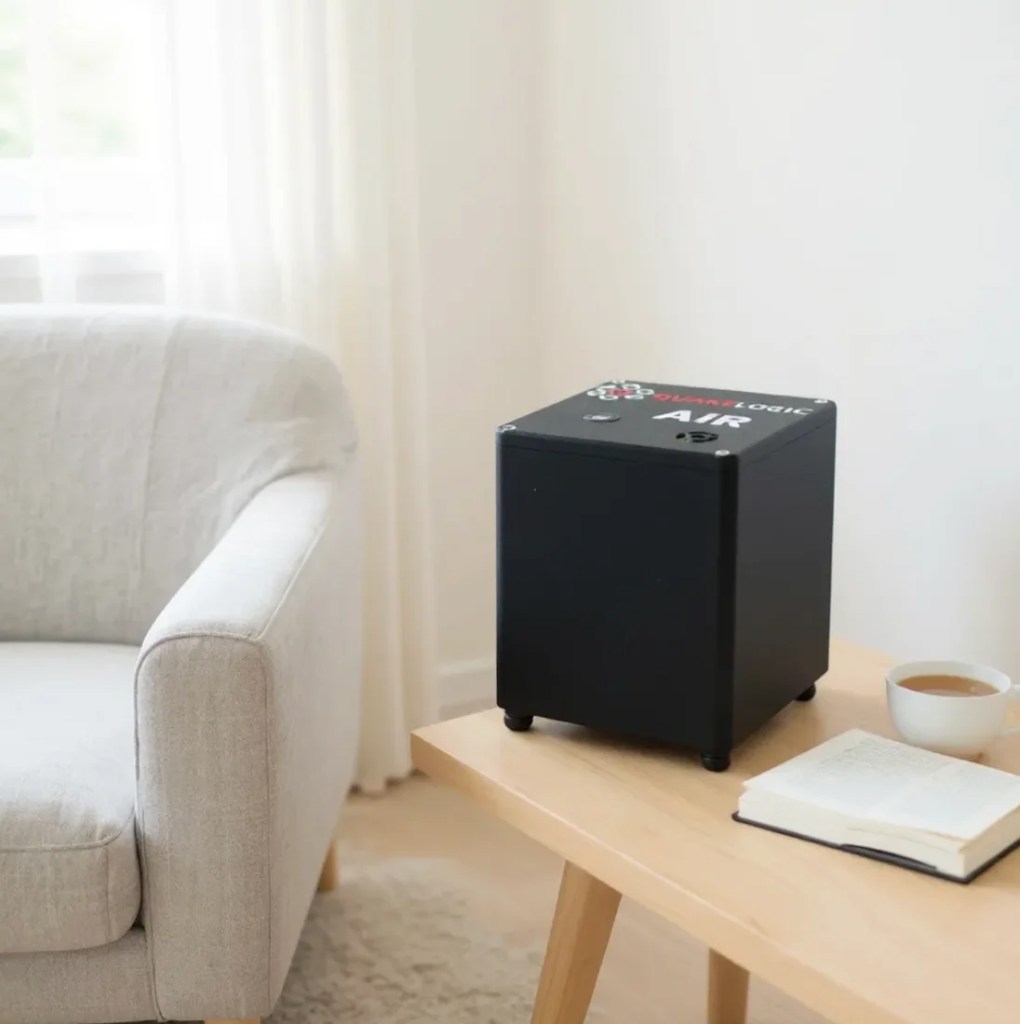
Silent Threats Demand Silent Detection
As unmanned aerial vehicles (UAVs) — or drones — become increasingly common in both civilian and military airspace, the need for reliable long-range UAV detection systems has never been greater. Conventional radar and optical systems face limitations in complex terrain or adverse weather. That’s where infrasound sensing technology comes in.
The SIS-1 Infrasound Sensor offers a cutting-edge approach to detecting and tracking UAVs using low-frequency acoustic waves, providing continuous, all-weather surveillance that complements existing radar or visual systems.


What Is Infrasound and Why It Works for UAV Detection
Infrasound refers to sound waves below the threshold of human hearing — typically below 20 Hz. These low-frequency waves can travel long distances and penetrate obstacles like hills, forests, and buildings.
Every UAV or drone produces a unique acoustic signature due to its propellers, engines, and aerodynamic behavior. The SIS-1 sensor detects these subtle infrasound emissions and distinguishes them from natural background noise through advanced filtering and signal processing.
This allows operators to identify, locate, and track drones even when they are invisible to the naked eye or radar — including small UAVs flying at low altitudes or beyond line of sight.
The SIS-1 Advantage
The SIS-1 Infrasound Sensor is purpose-built for field and defense applications requiring high sensitivity, low noise, and energy-efficient performance.
⚙️ Key Features
- Detection Range: 0.1 Hz – 50 Hz (−3 dB bandwidth)
- High Sensitivity: 2.5 – 3.5 mV/Pa for faint UAV signatures
- Ultra-Low Noise: Below the Low Noise Model (LNM) under 1 Hz
- Low Power Draw: < 5 mA @ 12 V — ideal for solar-powered systems
- Compact & Lightweight: 156 mm diameter, 67 mm height, 850 g
- Rugged Design: Operational between −20 °C and +60 °C
- Differential Output: For scalable multi-node detection networks
These specifications make SIS-1 perfect for deployment in permanent arrays, tactical mobile units, and long-term border installations.
Applications Across Defense and Security
QuakeLogic’s infrasound technology enables multiple use cases in national security and surveillance:
- UAV Detection & Tracking: Identify acoustic signatures of drones up to several kilometers away.
- Border Surveillance: Monitor unauthorized aerial movements in restricted zones.
- Explosion & Gunshot Detection: Detect and locate blasts or weapon discharges in real time.
- Multi-Hazard Monitoring: Integrate with environmental sensors for seismic, volcanic, and atmospheric observation.
- Smart Sensor Networks: Combine multiple SIS-1 units to form synchronized arrays for precise triangulation and trajectory calculation.
Easy Integration & Deployment
Each SIS-1 sensor is equipped with standard differential output and low-voltage operation, enabling direct integration with QuakeLogic dataloggers, signal processors, and visualization software. The system can be configured for:
- Real-Time UAV Acoustic Detection
- Automatic Threat Classification
- Event Recording and Remote Data Streaming
Combined with wind-noise reduction systems, SIS-1 delivers clear and reliable infrasound data even in challenging environments.
Why Choose QuakeLogic for UAV Detection
QuakeLogic brings decades of experience in seismic, infrasound, and structural monitoring systems to the defense and research sectors. The SIS-1 sensor reflects our commitment to precision engineering, reliability, and ease of deployment.
When integrated into your existing defense or border infrastructure, the SIS-1 becomes a force multiplier — adding a silent, passive detection layer capable of identifying aerial threats in all conditions.
Ready for Mission-Critical Monitoring
From UAV surveillance and perimeter protection to scientific field studies, SIS-1 is the trusted choice for organizations that demand uncompromised performance.
📩 Contact us today to learn how the SIS-1 Infrasound Sensor can strengthen your defense and UAV detection capabilities.
Last reviewed: 2026-07-04
Executive Summary
Infrasound monitoring measures low-frequency acoustic energy below the common audible range and is used for environmental, industrial, defense, and research applications. This article has been expanded as an engineering resource for readers evaluating infrasound monitoring concepts, instrumentation choices, and monitoring workflows. The discussion is educational and should be paired with project-specific review by qualified engineers, applicable codes, owner requirements, and equipment documentation.
Key Takeaways
- Define the engineering objective before selecting sensors, test equipment, trigger thresholds, or reporting workflows.
- Use calibrated instrumentation, documented installation practices, time synchronization, and traceable data handling where measurement quality matters.
- Interpret measured data in context: site conditions, structure type, noise environment, sampling rate, bandwidth, and boundary conditions all affect conclusions.
- Use authoritative references and project-specific criteria rather than relying on generic thresholds or unsupported performance claims.
Technical Explanation
In practical infrasound monitoring work, the engineering system is more than a sensor or a test platform. A credible workflow includes the measurement objective, instrument selection, mounting or boundary conditions, sampling and timing strategy, data validation, event or response detection, engineering review, and reporting. Weakness in any part of that chain can reduce confidence in the final interpretation.
For monitoring applications, engineers should document sensor orientation, coupling, environmental exposure, dynamic range, frequency bandwidth, data logger configuration, clock synchronization, communications, and maintenance procedures. For testing applications, engineers should document input motion, fixture design, payload properties, control limits, safety interlocks, acceptance criteria, and post-test data review.
Engineering Applications
| Application | Engineering Question | Typical Evidence Needed |
|---|---|---|
| Research and education | How does a structure, component, or sensor respond under controlled conditions? | Test plan, calibrated data, input motion, boundary conditions, and repeatable observations. |
| Critical infrastructure | Is the asset response normal, changing, or potentially unsafe after an event? | Baseline data, event records, thresholds, inspection workflow, and engineering sign-off. |
| Industrial facilities | Can monitoring support operational continuity and response decisions? | Site-specific criteria, reliable telemetry, alarm logic, maintenance records, and documented procedures. |
People Also Ask
What should be specified before buying equipment?
Specify the measurement objective, frequency range, amplitude range, environment, data format, timing needs, installation constraints, reporting requirements, and applicable standards or owner criteria.
Why do references and standards matter?
They provide terminology, acceptance criteria, test methods, and documentation expectations. They do not replace engineering judgment, but they reduce ambiguity and make results easier to review.
How should data quality be checked?
Review calibration status, timing, clipping, sensor orientation, signal-to-noise ratio, environmental artifacts, data completeness, and whether the record supports the engineering decision being made.
Related QuakeLogic Resources
- Detecting Noise Harassment with Smart Airborne Acoustic Monitoring
- Introducing the SIS-1 Infrasound Sensor: Precision in Low-Frequency Detection
- Mastering Infrasound Data: Techniques for Signal Enhancement and Analysis
- Converting Infrasound Sensor Data to Pascal: A Step-by-Step Guide
- Related QuakeLogic products and technologies
- QuakeLogic Engineering Blog topic resources
References
Recommended Diagram or Download
Media placeholder: Add an original diagram showing the measurement chain from sensor or test platform to data acquisition, analysis, engineering interpretation, and reporting. Where this article becomes a buyer guide or application note, create a downloadable PDF version after engineering review.
Discuss a Monitoring or Testing Application
QuakeLogic supports seismic monitoring, earthquake early warning, structural health monitoring, infrasound monitoring, vibration monitoring, data acquisition, and shake table testing applications. For project-specific guidance, contact QuakeLogic with the asset type, measurement objective, site constraints, and required deliverables.